
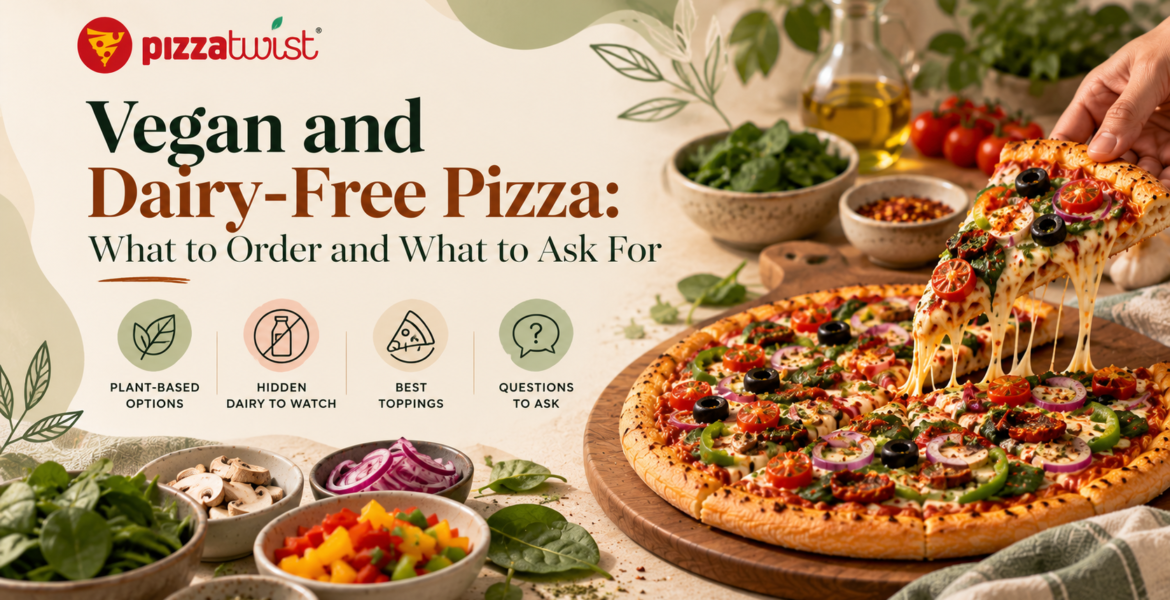
Pizza and cheese seem inseparable, so ordering vegan pizza or dairy-free pizza can feel intimidating. Will there be anything good on the menu? Is the crust safe? What about the sauce? The good news is that a satisfying plant-based pizza is easier to order than most people expect, once you know what to look for and what to ask.
This guide explains the difference between vegan and dairy-free, highlights where dairy and animal products can hide, suggests toppings that work, and gives you a list of questions to ask before you order.
Vegan vs. Dairy-Free: They Are Not the Same Thing
These two terms are often used interchangeably, but they mean different things:
- Dairy-free means the food contains no milk or milk-derived ingredients, such as cheese, butter, cream, yogurt, or whey. It may still contain eggs, honey, or meat.
- Vegan means the food contains no animal products at all. That includes dairy, meat, fish, eggs, and often honey.
- Vegetarian means no meat or fish, but it may include dairy and eggs. If you are looking for meat-free ideas, see our guide to the best vegetarian pizza toppings.
So a vegetarian pizza is not automatically vegan, and a dairy-free pizza is not automatically vegan either. Knowing which one you need helps you ask the right questions.
It also helps to separate preference from medical need. If you avoid dairy because of a milk allergy, the stakes are higher than for a lifestyle choice, and you should treat the ordering process more carefully, as described below.
Where Dairy and Animal Products Can Hide
Even a pizza that looks plant-based can contain surprises. Watch for these common areas:
- The cheese, of course. Standard mozzarella and other cheeses are dairy. Some restaurants offer plant-based cheese made from ingredients like nuts, soy, coconut oil, or starches, but availability varies.
- The dough. Some pizza doughs include milk, butter, or honey, depending on the recipe.
- Sauces. Pesto often includes Parmesan, and creamy sauces and white sauces usually contain milk or cream. Some ranch and garlic dressings do too.
- Crust brushing. Garlic butter or similar finishes brushed on the crust are a common source of dairy.
- Indian-inspired ingredients. Many Indian dishes use ghee (clarified butter), cream, yogurt, or paneer, a fresh cheese. A creamy butter chicken-style sauce, for example, typically contains butter and cream. If you are curious about how those flavors work, read our guide to butter chicken pizza ingredients and taste.
- Marinades and meats. Yogurt-based marinades are common with tandoori-style chicken.
The takeaway is simple: do not assume. Ingredients vary by restaurant, so always check.
Great Vegan Pizza Toppings and Combinations
A plant-based pizza does not have to feel like a compromise. Focus on bold flavor and texture:
- Vegetables: Mushrooms, bell peppers, red onion, spinach, olives, tomatoes, artichokes, roasted garlic, and jalapenos
- Legumes and plant proteins: Chickpeas, tofu, or plant-based sausage, if the restaurant offers them
- Herbs and aromatics: Fresh basil, cilantro, oregano, and chili flakes
- Sauces: A classic tomato sauce is often the simplest vegan base. Olive oil and garlic is another option, as long as no butter is used.
- Finishing touches: A drizzle of olive oil, fresh herbs, or a squeeze of lemon
If you enjoy bolder, spiced combinations, look for vegetable pizzas with warm spices and chutney-style flavors. Our post on unique pizza toppings offers more ideas, and our guide to building the perfect custom pizza shows how to tailor a pizza to your needs.
Questions to Ask Before You Order
A few direct questions can save you from a disappointing, or unsafe, meal. Consider asking:
- Do you offer plant-based or dairy-free cheese? If not, you can order a pizza without cheese and ask for extra vegetables and sauce.
- Does the dough contain milk, butter, eggs, or honey?
- Which sauces are dairy-free? Ask about the tomato sauce, pesto, and any specialty sauces.
- Is anything brushed on the crust after baking? Ask about garlic butter or similar toppings.
- Are plant-based toppings cooked on the same surfaces as meat and cheese? This matters for strict vegans and for people with allergies.
- How do you handle cross-contact? Shared ovens, cutters, and prep areas can transfer small amounts of dairy.
If you have a diagnosed allergy, tell the restaurant clearly when you order and ask whether they can accommodate it safely. If they cannot guarantee it, it is better to choose another option. Restaurant ingredients and practices change, so check each time you order, even from a place you have used before.
Tips for a Better Dairy-Free Pizza Experience
- Try a cheeseless pizza with bold toppings. Roasted vegetables, garlic, herbs, and a good sauce can be delicious on their own.
- Consider crust style. A thin, crisp crust highlights toppings when there is less cheese. Our comparison of thin crust vs. thick crust pizza can help you choose.
- Add a fresh side. A salad or a cooling cucumber side adds balance.
- Order extra for groups. If you are hosting, include at least one plant-based option so everyone has a pizza to enjoy.
- Handle leftovers safely. Refrigerate within two hours, according to USDA guidance, and reheat to 165°F.
Final Thoughts
Ordering vegan pizza or dairy-free pizza is easy when you know the difference between the terms, watch for hidden dairy in dough, sauces, and crust finishes, and ask a few smart questions. With the right toppings and a little communication, plant-based diners can enjoy pizza night just as much as anyone else.
Want to explore your options? Visit Pizza Twist to see the current menu and ask about ingredients and substitutions, and subscribe to our newsletter for the weekly Monday promotion.
0 Comments