
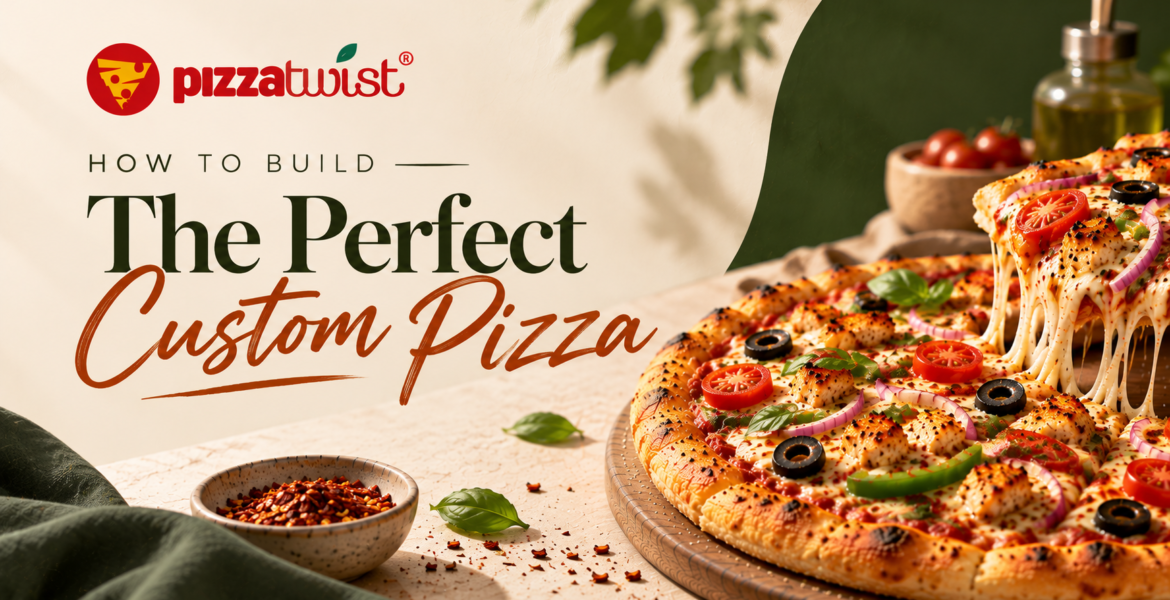
How to Build the Perfect Custom Pizza
What makes a pizza truly unforgettable? For some people, it is a crispy crust covered with classic tomato sauce and melted cheese. Others prefer bold sauces, spicy toppings, or creative combinations inspired by cuisines around the world. The beauty of pizza is that there is no single combination everyone has to love.
Learning how to build the perfect custom pizza gives you the freedom to create a meal that matches your taste. From choosing the right crust to balancing sauces, cheese, and toppings, every decision contributes to the final flavor.
At Pizza Twist, customization is part of the experience. The brand’s official website features a Create Your Own Pizza option, allowing customers to explore combinations alongside its specialty pizzas. Visit Pizza Twist to check the options available at your nearest location.
1. Start With the Right Pizza Crust
The crust creates the foundation for your pizza. Its thickness and texture influence how the toppings feel and how each bite comes together.
Here are some common crust styles to consider:
- Thin crust: A good choice if you enjoy a crispier base and want the sauce and toppings to stand out.
- Hand-tossed crust: Often offers a balance of chewiness and structure.
- Thick or pan-style crust: Ideal for people who prefer a more substantial, bread-like texture.
- Gluten-free crust: May be available for people who need or prefer a gluten-free option, depending on the restaurant.
The most suitable crust depends on your preferences and the toppings you choose. For example, a crisp base may complement a simple vegetable pizza, while a thicker crust can provide a hearty foundation for a generous topping combination.
Always check the local menu for available crust styles and ask about cross-contact if you have a food allergy or require strict gluten avoidance.
2. Choose a Sauce That Complements Your Toppings
Pizza sauce does more than keep the crust flavorful. It connects the ingredients and helps establish the overall character of the pizza.
Classic Red Sauce
Tomato-based sauce is a versatile choice for cheese, pepperoni, mushrooms, onions, and many other familiar toppings. Its tangy flavor balances the richness of melted cheese.
Creamy Garlic Sauce
Garlic sauce can provide a rich, savory base that pairs well with mushrooms, vegetables, chicken, and herbs.
Barbecue Sauce
Barbecue sauce brings smoky, sweet, and tangy notes to pizza. It works particularly well with chicken, red onions, and complementary savory ingredients.
Indian-Inspired Sauces
If you enjoy exploring fusion pizza, sauces inspired by tikka masala, tandoori, or curry flavors can offer a different experience. They can complement paneer, seasoned chicken, peppers, onions, and fresh herbs.
Pizza Twist’s published menu includes a variety of traditional and globally inspired combinations, though sauce choices depend on the specific pizza and location. Review your local menu before ordering.
Tip: Choose a sauce that complements your toppings instead of selecting several strong flavors that compete with one another.
3. Pick the Right Cheese
Cheese provides flavor, texture, and the familiar melted finish associated with pizza. Mozzarella is a popular choice because of its mild flavor and melting characteristics.
When building your own pizza, consider the balance between cheese and other ingredients. Too little cheese may leave the pizza feeling less cohesive, while too much can overpower delicate toppings or make the center heavy.
If you have dietary preferences, check whether your local restaurant offers suitable alternatives. Do not assume that every cheese substitute is available at every location.
4. Select the Best Pizza Toppings
Choosing toppings is where customization becomes exciting. The best pizza toppings are not necessarily the most numerous; they are the ingredients that work well together.
Classic Topping Combinations
If you prefer familiar flavors, try combinations such as:
- Pepperoni and mozzarella for a savory, classic taste.
- Mushrooms, onions, and bell peppers for a vegetable-forward pizza.
- Chicken, barbecue sauce, and red onions for a sweet-and-savory combination.
- Olives, mushrooms, tomatoes, and peppers for a mix of earthy and fresh flavors.
Creative Topping Combinations
If you want something different, experiment with contrasting flavors and textures:
- Spicy and creamy: Jalapeños, chicken, and a creamy sauce.
- Sweet and savory: Pineapple with a savory protein or vegetable combination.
- Indian-inspired: Paneer, onions, peppers, and a tikka masala-style sauce.
- Garlic and herb: Garlic-forward sauce, vegetables, and fresh herbs where available.
For the best result, start with a few ingredients that complement one another. Adding every topping you like may create an overcrowded pizza and make the individual flavors harder to appreciate.
5. Balance Flavor, Texture, and Moisture
A great custom pizza combines more than ingredients that taste good individually. It also considers how those ingredients work together.
Balance strong flavors. Spicy peppers, salty meats, tangy sauces, and rich cheese can all be delicious, but combining too many intense ingredients may overwhelm the pizza.
Mix textures. Soft cheese, crisp vegetables, and a well-baked crust create a more interesting eating experience.
Avoid excessive moisture. Ingredients with high water content can make a crust soggy, especially when used in large quantities. Appropriate preparation and balanced portions help maintain texture.
Think about every bite. Distribute toppings evenly so that one slice is not overloaded while another has very little flavor.
These principles are useful whether you make pizza at home or customize an order from a restaurant.
6. Try an Indian Fusion Custom Pizza
One way to make your pizza stand out is to combine familiar pizza ingredients with flavors inspired by another cuisine.
For example, paneer with tikka masala-style sauce, onions, bell peppers, and herbs can create a flavorful vegetarian combination. If you prefer meat, seasoned chicken with garlic, green chilies, onions, and a complementary sauce offers another direction.
Pizza Twist is particularly relevant for diners interested in fusion-inspired pizza. Its published menu includes Indian-inspired combinations such as Tikka Masala Paneer Pizza and Indian Garlic Chicken Pizza at certain locations. These examples demonstrate how customization can move beyond traditional tomato sauce and pepperoni.
Availability and ingredients can vary, so check the official Pizza Twist website or your local ordering menu before choosing a combination.
7. Consider Your Guests and Dietary Preferences
If you are ordering pizza for a family dinner, office lunch, or party, customization can help accommodate different tastes.
Consider ordering a mixture of classic and adventurous flavors. A familiar cheese or pepperoni pizza can satisfy traditional preferences, while a specialty or fusion pizza gives adventurous eaters something new to try.
Before ordering, ask guests about food allergies and dietary requirements. Confirm ingredients directly with the restaurant, including sauces, cheese alternatives, and possible cross-contact. Menu labels alone may not provide enough information for people with serious allergies.
Create Your Perfect Pizza With Pizza Twist
Building a custom pizza is about finding the right balance for your personal taste. Start with a crust you enjoy, choose a complementary sauce, add cheese, and select toppings that work together. Whether you prefer classic pepperoni, fresh vegetables, barbecue chicken, or Indian-inspired fusion flavors, a thoughtful combination can make pizza night more enjoyable.
Pizza Twist offers a Create Your Own Pizza option alongside traditional and specialty pizzas. Its menu can provide inspiration for both familiar combinations and more adventurous choices. Visit Pizza Twist to explore the menu, locate a nearby restaurant, and review the customization options available in your area.
Final Thoughts
There is no universal recipe for the perfect custom pizza. The ideal combination depends on your favorite flavors, preferred crust texture, and the balance of sauce, cheese, and toppings.
Start simple, experiment with complementary ingredients, and try a new flavor combination when you are ready for something different. With a little thought and creativity, you can build a pizza that feels uniquely yours.
0 Comments