
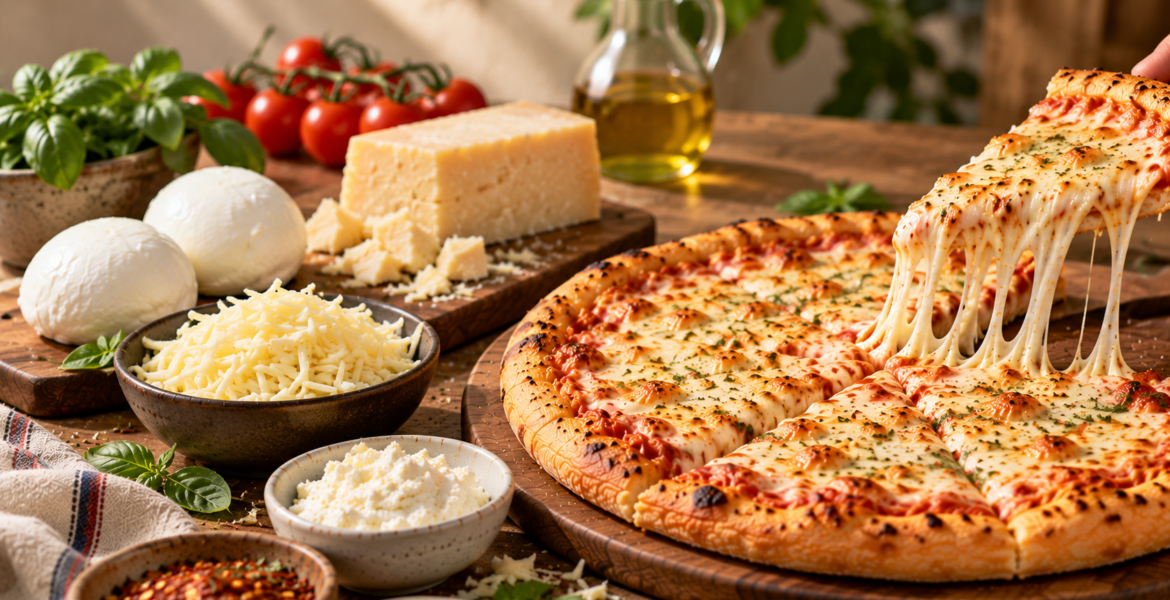
Cheese is the soul of pizza. It determines how a slice stretches, browns, and tastes, and the wrong choice can leave you with a greasy, watery, or bland pie. So what is the best cheese for pizza? The honest answer is that it depends on the style of pizza, the toppings, and your taste.
This guide walks through the most popular pizza cheeses, from the everyday classics to Indian-inspired options like paneer, and explains how each one behaves in the oven so you can order or cook with confidence.
What Makes a Good Pizza Cheese?
Before comparing cheeses, it helps to know what you are looking for. Pizza cheese is judged on a few qualities:
- Meltability: Does it melt smoothly and stretch when you pull a slice?
- Moisture: Wetter cheeses can make a crust soggy, while drier cheeses brown better.
- Fat content: Fat adds richness and helps with browning, but too much can make the pizza greasy.
- Flavor: Some cheeses are mild and creamy, while others are sharp, salty, or nutty.
Most pizzerias combine a good melting cheese with one or two flavor-forward cheeses to get the best of each.
The Classic Pizza Cheeses
Mozzarella
Mozzarella is the default pizza cheese, and for good reason. It melts evenly, stretches beautifully, and has a mild, milky flavor that lets toppings shine. It comes in two main forms:
- Low-moisture mozzarella is the firmer, drier type commonly used on most pizzas in the United States. It shreds easily, browns well, and gives the classic cheese pull.
- Fresh mozzarella is soft, creamy, and packed in liquid. It tastes delicate and milky, but it contains more water, so it can release moisture as it bakes. Many cooks pat it dry or add it near the end of baking. Buffalo mozzarella, made from water buffalo milk, is a richer, more distinctive variation.
Provolone
Provolone is a semi-hard cheese with a slightly sharper, more savory flavor than mozzarella. It melts well and is often blended with mozzarella to add depth. Aged provolone has a stronger, tangier bite, so it works best as part of a blend rather than on its own.
Parmesan and Pecorino Romano
These hard, aged cheeses do not melt into a gooey layer. Instead, they are grated over a pizza to add a salty, nutty finish. Parmesan is made from cow’s milk, while Pecorino Romano is made from sheep’s milk and tastes sharper and saltier. A little goes a long way.
Cheddar and White Cheddar
Cheddar brings a sharper, tangier flavor and a deeper color. It melts well but can release more oil, so it is usually combined with mozzarella, especially on pizzas with bold toppings.
Ricotta
Ricotta is soft and mildly sweet. It is usually dolloped on a pizza rather than melted, and it pairs well with vegetables, herbs, and a drizzle of olive oil.
Gorgonzola and Other Blues
Blue cheeses add a strong, tangy, salty punch. They are best in small amounts alongside sweet toppings such as caramelized onion or fruit.
Paneer: The Indian Fusion Favorite
Paneer is a fresh, mild cheese that is central to Indian cooking. It is made by curdling heated milk with an acid, such as lemon juice or vinegar, then pressing the curds. Because it is made with acid rather than animal rennet, it is traditionally a staple of vegetarian cooking.
The most important thing to know about paneer is that it does not melt. Instead, it softens and holds its shape when heated, which makes it an excellent topping rather than a melting layer. On a pizza, paneer is usually cubed or crumbled and often marinated in spices, then paired with a melting cheese such as mozzarella.
Paneer works well with:
- Tikka-style marinades with yogurt, chili, and warm spices
- Bell peppers, red onion, and cilantro
- Creamy tomato-based sauces
- Spinach and other greens
If you want to explore spiced vegetarian pizzas, read our guide to the best vegetarian pizza toppings and our post on Indian fusion pizza. Keep in mind that paneer is a dairy product, so it is not suitable for vegan or dairy-free diets.
Beyond the Basics: Other Cheeses Worth Trying
- Fontina: Creamy, nutty, and excellent at melting, it adds richness to white pizzas.
- Asiago: Sharp and savory when aged, it works as a grating or blending cheese.
- Monterey Jack: Mild, buttery, and a great melter, often used in blends.
- Brick cheese: Known for its role in Detroit-style pizza, it melts into a rich, caramelized edge.
- Burrata: A soft ball of mozzarella with a creamy center, typically added after baking.
Which Cheese Goes With Which Pizza?
| Pizza style | Cheese suggestion |
|---|---|
| Classic cheese or pepperoni | Low-moisture mozzarella, with a little provolone |
| Margherita-style | Fresh mozzarella with fresh basil |
| White pizza | Ricotta, mozzarella, and a sprinkle of Parmesan |
| Meat lovers | Mozzarella with provolone or cheddar |
| Vegetable pizza | Mozzarella with feta, ricotta, or Parmesan |
| Indian-style paneer pizza | Mozzarella as the melting base, with paneer as a topping |
| Butter chicken-style pizza | Mozzarella, which balances the creamy sauce |
If you are curious about how a creamy sauce changes the equation, our guide to butter chicken pizza ingredients and taste explains the flavor balance.
Tips for Getting the Best Cheese Result
- Do not overload the pizza. Too much cheese can make the center soggy and the crust heavy.
- Match the cheese to the crust. A crisp thin crust handles less cheese well, while a thicker crust can support more. Our comparison of thin crust vs. thick crust pizza goes deeper.
- Blend for balance. Combining a melter like mozzarella with a flavor cheese like provolone or Parmesan often tastes better than using one cheese alone.
- Use grated hard cheeses as a finish. Sprinkle Parmesan or Pecorino after baking for maximum aroma.
- Customize your order. If you like to choose your own toppings, see how to build the perfect custom pizza.
- Ask about dietary needs. If someone avoids dairy, has a milk allergy, or follows a vegan diet, check ingredients with the restaurant before ordering.
Final Thoughts
There is no single best cheese for pizza, but there is a best cheese for your pizza. Mozzarella remains the reliable foundation, provolone adds depth, hard cheeses add a savory finish, and paneer brings a distinctive Indian flavor that holds its shape in the oven. Once you understand how each cheese melts and tastes, it becomes much easier to build a pizza you love.
Ready to taste the difference? Visit Pizza Twist to see the current menu and place your order, and subscribe to our newsletter for the weekly Monday promotion.
0 Comments